Do you feel shoulder pain while lifting your arm, reaching overhead, or even while sleeping on one side? Persistent shoulder pain and weakness may not be due to simple strain. In many cases, it could be a rotator cuff tear, a common shoulder condition that affects movement and daily activities. Rotator cuff injuries are especially common in older adults and people who repeatedly use their shoulders for work, sports, or household activities. Early diagnosis and proper treatment can help reduce pain, restore shoulder movement, and prevent long-term complications such as shoulder arthritis.
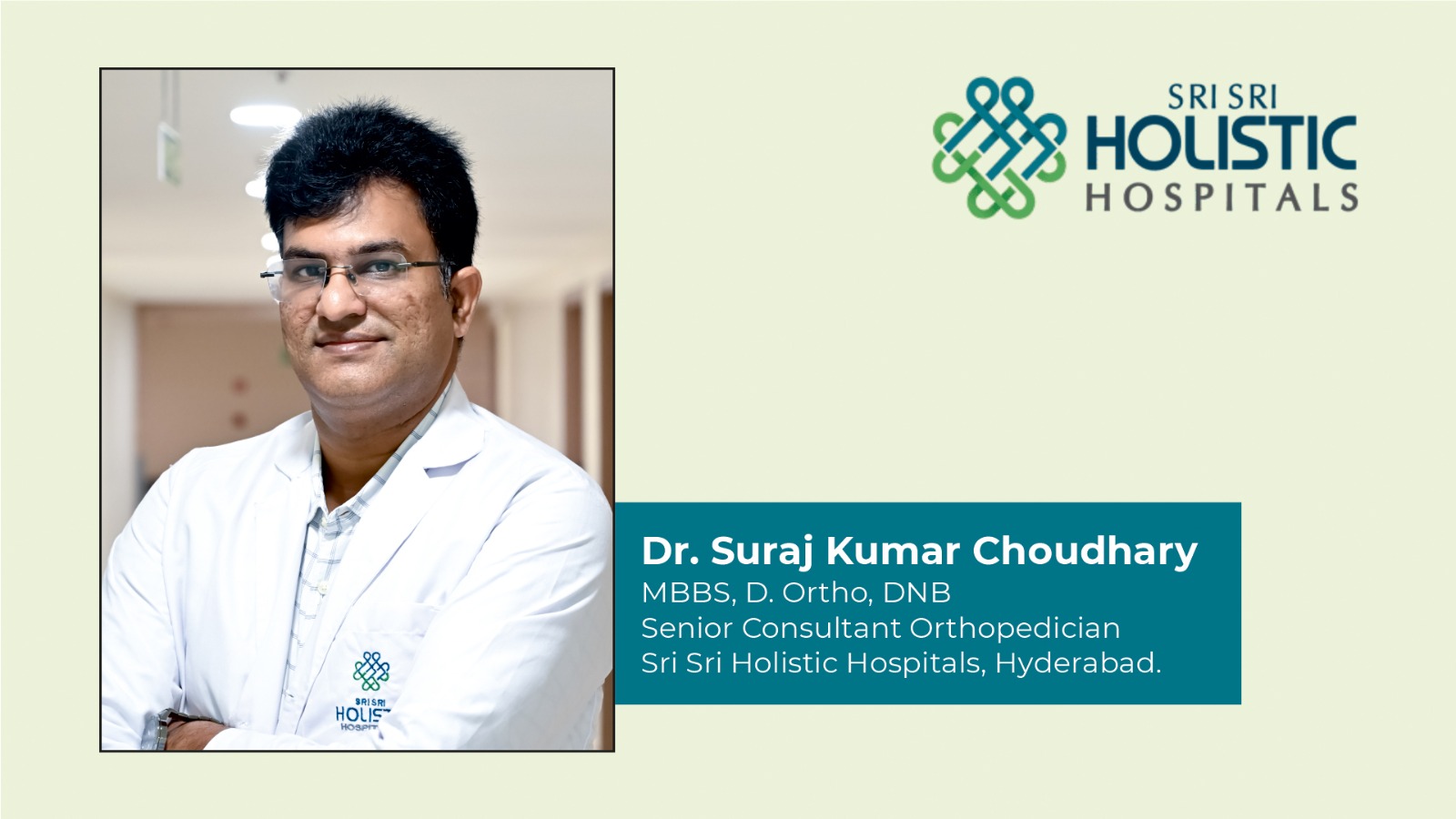
Dr. Suraj Kumar Choudhary, Senior Orthopedic Doctor at Sri Sri Holistic Hospitals, explains the causes, symptoms, treatment options, and ways to prevent worsening of rotator cuff injuries.
What is the Rotator Cuff?
The rotator cuff is a group of four muscles and tendons that support and stabilise the shoulder joint. These muscles help the shoulder move smoothly and allow actions such as lifting, rotating, and reaching.
The four muscles include:
- Supraspinatus
- Infraspinatus
- Teres minor
- Subscapularis
Among these, the supraspinatus tendon is the most commonly injured. It plays an important role in helping raise the arm.
What is a Rotator Cuff Tear?
A rotator cuff tear occurs when one or more tendons detach partially or completely from the arm bone. This can happen gradually due to wear and tear over time or suddenly after an injury.
There are two main types of tears:
- Partial Tear: The tendon is damaged or frayed but not fully detached
- Full-Thickness Tear: The tendon completely separates from the bone
Rotator cuff tears are commonly seen in people above 50 years of age because repeated shoulder use weakens the tendons over time.
Common Symptoms
The symptoms may develop slowly or suddenly after an injury. Common signs include:
- Deep aching pain in the shoulder
- Pain that worsens at night
- Difficulty sleeping on the affected side
- Weakness while lifting the arm
- Difficulty performing daily activities
- Reduced range of shoulder movement
Some people may also notice clicking sounds or difficulty reaching overhead.
What Causes Rotator Cuff Tears?
Several factors can contribute to rotator cuff injuries, including:
- Age-related wear and tear
- Repetitive shoulder movements
- Sports activities involving overhead motion
- Falling on an outstretched arm
- Lifting heavy objects suddenly
- Untreated shoulder injuries
Ignoring symptoms for a long time can sometimes lead to rotator cuff arthropathy, a condition where shoulder arthritis develops due to long-standing tendon damage.
How is it Diagnosed?
Doctors usually diagnose rotator cuff tears through:
- Physical examination
- Strength and movement assessment
- X-rays
- MRI scans to identify the extent of the tear
Early evaluation is important to prevent worsening of the condition.
Treatment Options
Treatment depends on the severity of the tear, age, activity level, and symptoms.
Conservative Treatment
Many patients improve with non-surgical care such as:
- Rest and avoiding overhead activities
- Pain relief medications
- Ice application
- Physical therapy exercises to strengthen surrounding muscles
- Surgical Treatment
Surgery may be recommended if:
- Pain continues for several months
- There is a complete tear
- Shoulder weakness is severe
- Daily activities become difficult
- Physical therapy does not help
Arthroscopic rotator cuff repair is a minimally invasive procedure performed through small incisions using a tiny camera and specialised instruments. The torn tendon is reattached to the bone, helping restore shoulder function.
Recovery and Prevention
Recovery after surgery usually takes a few months, followed by rehabilitation exercises and physiotherapy. Most patients gradually regain shoulder strength and mobility.
To reduce the risk of rotator cuff injuries:
- Avoid repetitive strain on the shoulder
- Strengthen shoulder muscles regularly
- Maintain proper posture
- Warm up before sports or exercise
- Seek medical care early for persistent shoulder pain
Conclusion
Rotator cuff tears are a common cause of shoulder pain and weakness, especially in older adults and active individuals. Ignoring symptoms can affect daily life and may lead to long-term shoulder damage. Early diagnosis and timely treatment can help improve recovery and prevent complications.
At Sri Sri Holistic Hospitals, expert orthopedic specialists provide advanced evaluation and personalised treatment for shoulder conditions. If you are experiencing persistent shoulder pain, weakness, or difficulty lifting your arm, book an appointment with Dr. Suraj Kumar Choudhary for expert care and guidance.